

- Home
- TCO Leather Goods
- Leather Basics 101
Table of Contents
- What Is Leather?
- Why Leather Is an Environmental Choice
- Understanding Leather Grades: Full Grain, Top Grain & More
- Tanning Methods: Vegetable vs Chrome Tanning
- How to Care for Your Leather Products
- Identifying Quality Leather
- Common Leather Terms & Glossary
- Frequently Asked Questions (FAQ)
What is leather?
Leather is a durable, natural material created from animal hides through a process called tanning. The key component of leather is the corium layer of skin — the dense network of collagen fibers that gives leather its distinctive strength, flexibility, and breathability.
Unlike synthetic alternatives, real leather ages beautifully, developing a unique patina that adds character and value over time. Whether you're shopping for a leather wallet, belt, bag, or jacket, understanding the fundamentals helps you make informed purchasing decisions.
How Leather Is Made
- Liming — Removal of hair and epidermis
- Fleshing — Cleaning the underside layer
- Tanning — Stabilizing the hide to prevent decomposition
- Finishing — Oils, waxes, dyes, and textures applied
- Drying — Slow drying for optimal texture
Why Leather Is an Environmental Choice
Cow Hides: From Food Industry Byproduct to Lasting Material
Here's a fact many people don't realize: cow hides are a natural byproduct of the food industry, not the reason cattle are raised. When you purchase leather, you're not driving demand for cattle farming — you're helping put a waste material to productive use.
Every year, millions of cattle are raised for beef and dairy. Once those animals are processed for food, their hides remain. If no one turns those hides into leather, they have to go somewhere — and increasingly, that "somewhere" is a landfill.
Landfill Diversion: A Growing Problem
Discarded cow hides in landfills don't just take up space — they actively decompose and release methane, a greenhouse gas approximately 25-80 times more potent than CO₂ over a 20-year period. According to the Leather and Hide Council of America (LHCA), the carbon cost of wasted hides is a serious and growing worldwide concern as global hide discard rates rise.
By diverting hides from landfills to tanneries, the leather industry:
- Prevents methane emissions that decomposing hides would otherwise release
- Reduces landfill burden in communities near meat-processing facilities
- Creates value from a material that would otherwise be discarded waste
Additional Environmental Benefits of Choosing Leather
Beyond landfill diversion, real leather offers several sustainability advantages over synthetic alternatives:
| Benefit | Explanation |
|---|---|
| Circular Economy | Leather transforms an organic waste stream into durable goods, embodying upcycling at its core |
| Longevity = Less Waste | A full grain leather wallet or bag lasts decades, reducing the replacement cycle that drives fast-fashion landfill overflow |
| Biodegradability | Unlike petroleum-based synthetics (PU, PVC), vegetable-tanned leather breaks down naturally at end of life |
| No Microplastic Shedding | Synthetic "leather" sheds microplastics into waterways with every wear; real leather does not |
| Renewable Resource | Hides regenerate with every generation of livestock — a continuous supply that doesn't deplete finite petroleum reserves |
| Supports Rural Economies | Tanneries and leather artisans provide skilled jobs in communities connected to agriculture, preserving craftsmanship traditions |
| Lower Lifetime Carbon Footprint | While production has emissions, leather's decades-long usable life means its per-year carbon impact is far lower than synthetics replaced annually |
The United Nations Industrial Development Organization (UNIDO) recognizes that since hides are waste subject to disposal, the leather industry valorizes and recycles a material that would otherwise have an environmental cost. Choosing durable, full grain leather over disposable synthetic alternatives is one of the most environmentally responsible decisions a consumer can make.
Understanding Leather Grades: Full Grain, Top Grain & More
Not all leather is created equal. The leather grading system determines quality, durability, and price. Here's what you need to know:
Full Grain Leather
Best quality — Untouched surface layer retains natural grain, scars, and markings.
| Feature | Details |
|---|---|
| Durability | Highest - develops stronger with age |
| Breathability | Excellent |
| Patina | Develops naturally over time |
| Cost | Premium pricing |
| Best Uses | High-end wallets, bags, boots, belts |
Full grain leather is the toughest and most luxurious option. Like well-worn denim, imperfections tell a story while maintaining structural integrity.
Top Grain Leather
Second-highest grade — Surface sanded to remove blemishes.
| Feature | Details |
|---|---|
| Durability | Very good - slightly less than full grain |
| Breathability | Good (may be reduced by finishes) |
| Patina | Limited due to protective coatings |
| Cost | Mid-to-premium range |
| Best Uses | Fashion accessories, furniture, jackets |
Top grain leather offers excellent quality with more uniform appearance. Protective coatings improve stain resistance but may limit natural aging.
Genuine Leather
Mid-tier grade — Real leather but lower quality layers.
- Split from lower hide layers
- Often embossed to mimic grain
- Less durable, shorter lifespan
- Budget-friendly option
Bonded Leather
Lowest grade — Leather scraps reconstituted with adhesive.
- Contains minimal real leather fibers
- Prone to cracking and peeling
- Not recommended for long-term use
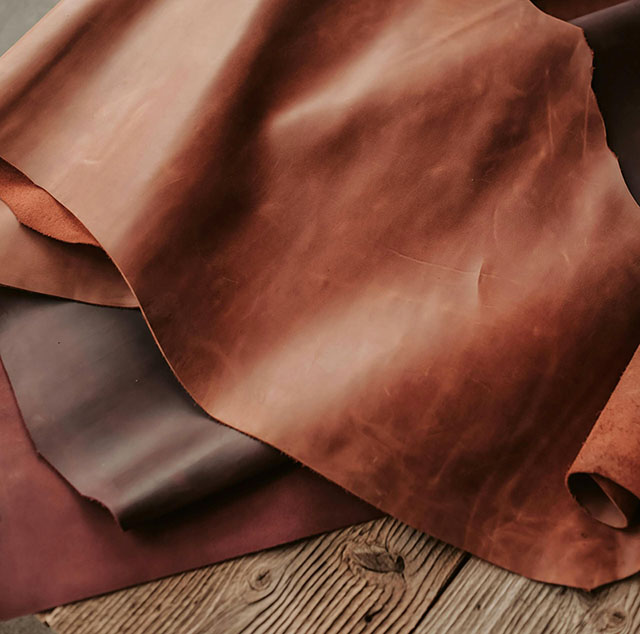
Good leather tells the story of its origin — and grows more beautiful with every chapter of its life.
Topanga Creek Outpost
Tanning Methods: Vegetable vs Chrome Tanning
The tanning process transforms raw hides into stable leather. Two primary methods dominate the industry:
Vegetable tanning
A traditional, eco-friendly process using plant-based tannins.
How It Works: Hides soak in solutions made from tree bark, leaves, and twigs rich in tannins.
| Benefit | Description |
|---|---|
| Natural Process | Biodegradable, environmentally friendly |
| Smell | Distinct earthy aroma |
| Aging | Develops rich patina over years |
| Duration | 1-6 months (slow process) |
| Ideal For | Saddles, belts, artisan goods |
The tannins slowly soak in and bind with the proteins in the hide, making it super strong and preventing it from rotting. This part can take weeks, and sometimes even months because good things take time!
Chrome Tanning
Modern industrial method using chromium salts.
How It Works: Chromium III salts bind rapidly to hide proteins, creating stable leather.
| Benefit | Description |
|---|---|
| Speed | Completed in ~1 day |
| Softness | Naturally supple feel |
| Water Resistance | Excellent |
| Color Range | Easily dyed vibrant colors |
| Ideal For | Apparel, handbags, upholstery |
Instead of a long soak in a natural tub, chrome tanning only takes about a day, much faster than the vegetable tanning tea bath. Once the tanning is complete, the leather gets some finishing touches. It might be treated with natural oils or wax to make it soft and supple, and maybe even dyed a cool color.
How to Care for Your Leather Products
Proper leather care extends product life and maintains appearance. Follow these expert recommendations:
Daily Maintenance
- Dust regularly with a soft, dry cloth
- Store in cool, dry place away from direct sunlight
- Use leather-conditioned dust bags for storage
Conditioning Schedule
| Leather Type | Frequency | Recommended Product |
|---|---|---|
| Full Grain | Every 3-6 months | Natural oil-based conditioner |
| Top Grain | Every 6-12 months | Light leather cream |
| Suede / Nubuck | Every 3 months | Specialized suede protector |
Stain Removal Tips
- Water stains: Air dry naturally, never use heat
- Oil stains: Apply cornstarch, leave overnight, brush off
- Ink stains: Use cotton swab with mild alcohol, test first
What to Avoid
- Direct heat sources (radiators, hairdryers)
- Harsh chemicals or household cleaners
- Prolonged sun exposure
- Over-conditioning (can soften fibers too much)
Identifying Quality Leather
When shopping for quality leather products, look for these indicators:
Signs of Quality
- Natural grain variation - No two spots identical
- Distinct leather scent - Rich, earthy aroma
- Warm touch - Feels warm to the palm, not cold
- Pores visible - Microscopic texture visible under magnification
- Edge finish - Clean, sealed edges indicate craftsmanship
Red Flags of Lower Quality
- Perfectly uniform pattern (likely embossed/fake)
- Plastic-like smell
- Cold, smooth surface temperature
- Fraying edges or visible backing material
Common Leather Terms & Glossary
- Patina
- Natural sheen developed through aging and use
- Corium
- Dense fiber layer beneath hair giving leather strength
- Tanning
- Chemical process preserving animal hide
- Aniline Dye
- Transparent dye penetrating deep into leather
- Nappa
- Soft, supple leather from lamb or kid
- Saddle Stitch
- Hand-sewn stitching method for durability
- Split Leather
- Lower layer of hide, often used for suede
- Pull-Up Leather
- Oil/wax-infused leather that lightens when stretched
Frequently Asked Questions
What's the difference between full grain and top grain leather?
We take door handles, pulls, and staircase handrails you already touch every day and wrap them by hand in full-grain leather, using the traditional saddle-stitch method when suitable. Every hole is punched individually, and the stitching is pulled tight by two needles working from opposite ends of one thread — a technique machines can't replicate.
Is vegetable-tanned leather better than chrome-tanned?
Neither is universally better—it depends on your priorities. Vegetable-tanned leather is more eco-friendly, develops superior patina, and appeals to artisan collectors. Chrome-tanned leather offers greater water resistance, softer feel, and faster production at lower cost.
How long does quality leather last?
Properly maintained full grain leather can last 20-50+ years. Top grain leather typically lasts 10-20 years. Genuine leather averages 5-10 years with regular use and care.
Can I condition leather too often?
Yes. Over-conditioning can oversaturate fibers, making them soft and weak. Follow manufacturer guidelines—generally every 3-12 months depending on leather type and exposure.
How do I restore dry, cracked leather?
Clean gently with leather-safe soap, apply quality leather conditioner liberally, allow 24-hour absorption, then buff. Severe cracks may require professional restoration or filler treatments.
Is all "genuine leather" real leather?
Yes, genuine leather contains real leather fibers but represents a mid-tier grade below full and top grain. It's not synthetic but indicates lower quality than premium categories.
What makes Hermann Oak, Horween, and Wickett & Craig special?
These American tanneries are industry leaders known for premium vegetable-tanned leather, consistent quality control, and sustainable practices. Products from these suppliers command higher prices due to reputation and craftsmanship standards.
Are cow hides raised specifically for leather?
No. Cow hides are a byproduct of the food industry — cattle are raised primarily for beef and dairy, not for their skins. The leather industry transforms this organic waste material into durable, lasting goods that would otherwise decompose in landfills and release methane, a potent greenhouse gas.
Is leather environmentally friendly compared to synthetic alternatives?
Real leather offers several environmental advantages: it diverts food-industry waste from landfills, avoids the microplastic shedding associated with PU and PVC synthetics, biodegrades naturally at end of life, and lasts decades longer — meaning fewer replacements and less waste over time.
What happens to cow hides if they aren't used for leather?
Unused cow hides typically end up in landfills where they decompose and release methane, a greenhouse gas 25-80 times more potent than CO₂. By converting hides to leather, tanneries prevent these emissions and create valuable, durable products from what would otherwise be waste.
Where we source our leather
We source our leather from the top reputable tanneries around the country.
Hermann Oak Leather
Hermann Oak is a family-run business that started in 1881 and is one of the oldest tanneries in the country. They produce the highest grade vegetable tanned leather using the traditional tanning process that's been passed down for generations. The natural process of soaking leather in tree barks takes time but the end result is the finest leather we can get our hands on.
Wickett & Craig Leather
Wickett & Craig was founded in 1886 and is one of the only specialty vegetable tanneries in the United States. They're known for their dedication to traditional methods and the exceptional quality of their leather, prized by artisans and crafters around the world. Throughout the years, Wickett & Craig has adapted to changing markets. While equestrian products were once a big focus, the rise of luxury goods has seen them cater to a wider range of uses for their leather.
Horween Leather Company
Horween Leather Company, based in Chicago, is a renowned American tannery with a rich history dating back to 1905. It's one of the oldest continuously operating tanneries in the U.S., known for its high-quality, durable leathers like Chromexcel and Shell Cordovan. Horween supplies leather for a wide range of products, including footwear, sports equipment (notably NFL footballs and NBA basketballs), and various leather goods. This family-owned company has maintained its traditional tanning processes, contributing to its reputation for producing exceptional, long-lasting leather.
Where to find our handmade products
We handcraft all of our leather goods in our studio in Topanga, California. Visit our store and studio at 1273 North Topanga Canyon Blvd, or shop our products online.